
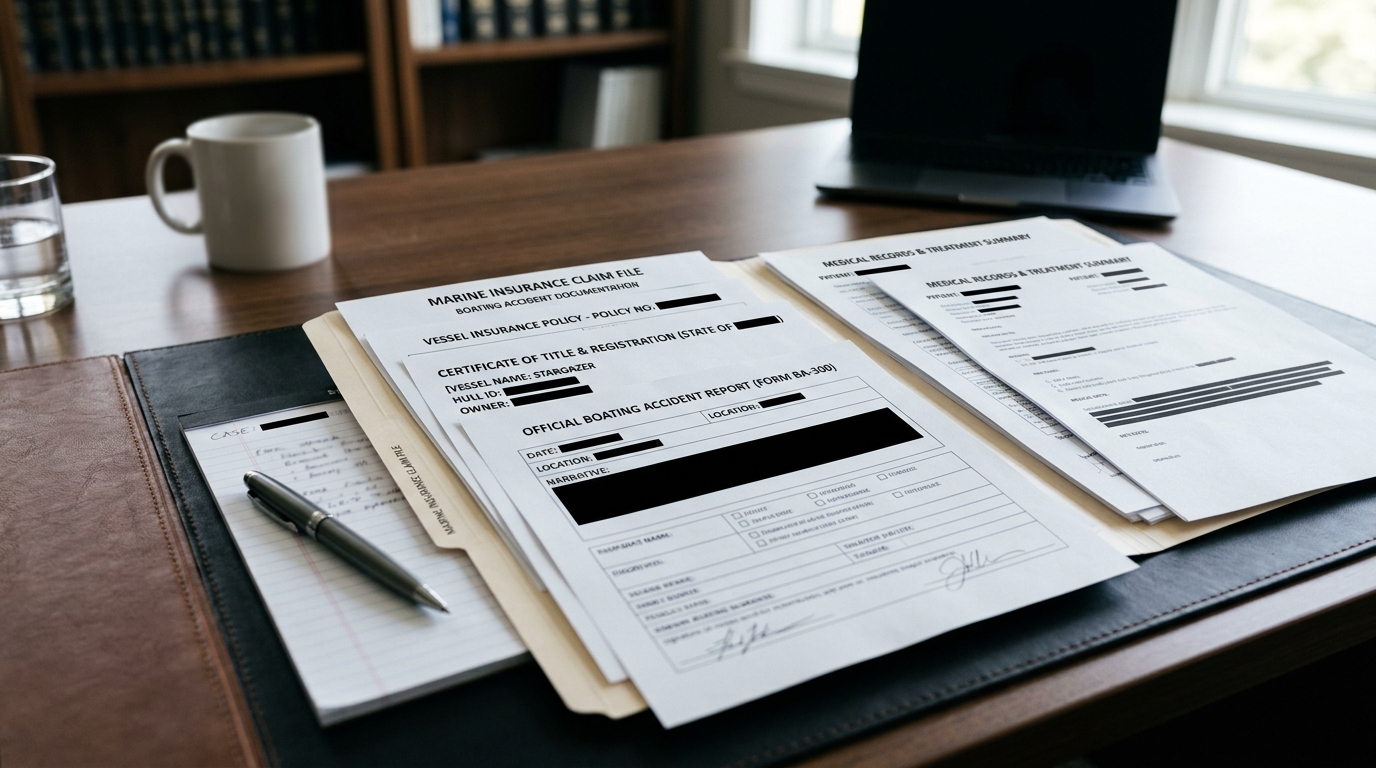
Insurance coverage after a boating accident in New York can be more complicated than ordinary auto insurance because the claim may involve a vessel owner, operator, passenger, rental company, marina, dock owner, maintenance provider, charter company, public entity, or product manufacturer. Coverage may depend on who owned the vessel, who had permission to operate it, where the injury happened, and what policy exclusions apply. People reviewing insurance options after a watercraft injury may use a boating accident lawyer Long Island resource to understand how coverage, liability, evidence, and damages are generally evaluated.
Quick Answer
A New York boating accident insurance claim usually depends on the vessel owner, operator permission, vessel use, accident location, injury type, rental agreement, marina involvement, and available policies. Potential insurance sources may include boat insurance, vessel owner coverage, homeowner’s insurance, umbrella coverage, rental company insurance, marina liability insurance, charter or commercial vessel coverage, product liability coverage, and public entity coverage. Important documents may include insurance letters, policy declarations, claim numbers, accident reports, vessel registration, rental agreements, marina records, medical records, photos, witness statements, and repair estimates.
Key Takeaways
- Boating accident insurance may involve multiple policies, not just one boat policy.
- Vessel owner coverage may matter when another person operated the boat with express or implied permission.
- New York Navigation Law § 48 addresses owner liability for negligent vessel operation with permission and includes language involving insurance policies issued to vessel owners.
- Rental boat, Jet Ski, marina, charter, dock, and public property claims may involve different insurance sources.
- Boating while intoxicated, unauthorized operation, commercial use, or policy exclusions may create coverage disputes.
- A written boating accident report may be required within five days after qualifying vessel accidents involving injury, death, disappearance, or property damage above the statutory threshold.
- Public docks, municipal marinas, public vessels, or government-controlled waterfront areas may involve shorter notice rules.
Why Boating Accident Insurance Can Be Complicated
Boating accident insurance can be complicated because watercraft claims may involve different locations and different responsible parties. The injury may happen on open water, at a dock, during boarding, in a marina, on a rental vessel, near a public launch, on a personal watercraft, or because of defective equipment.
A single boating accident may involve:
- Boat insurance
- Homeowner’s insurance
- Umbrella insurance
- Rental company insurance
- Marina liability insurance
- Commercial charter insurance
- Maintenance contractor insurance
- Product liability insurance
- Public entity coverage
- Medical payment coverage in limited situations
The injured person may not know which policy applies right away. The visible boat operator may not own the vessel. A rental company may have a separate policy. A marina may control the dock. A public entity may own the launch area. A manufacturer may be involved if equipment failed.
The first insurance question is usually not “Which company should pay?” It is “Who may be legally responsible, and what coverage applies to that party?”
Boat Owner Insurance
Boat owner insurance may be one of the first sources reviewed after a boating accident. A boat owner’s policy may provide liability coverage when the owner or a permitted operator causes injury or property damage. However, coverage depends on the policy language, vessel type, location, operator status, and exclusions.
Boat owner insurance may be relevant when:
- The owner operated the vessel.
- A family member operated the vessel.
- A friend borrowed the boat.
- A passenger was injured.
- Another vessel was struck.
- A swimmer, kayaker, or paddleboarder was injured.
- The boat caused dock or property damage.
- The vessel owner allowed someone else to operate it.
New York Navigation Law § 48 states that every owner of a vessel used or operated on New York navigable waters, or certain tidewaters bordering or within Nassau and Suffolk counties, may be liable for death, personal injury, or property damage resulting from negligent use or operation by someone operating with the owner’s express or implied permission.
This makes ownership and permission central insurance issues.
Operator Permission and Coverage Disputes
Permission can affect whether a boat owner’s insurance applies. A policy may treat an authorized operator differently from someone who took the vessel without permission or used it outside the permitted scope.
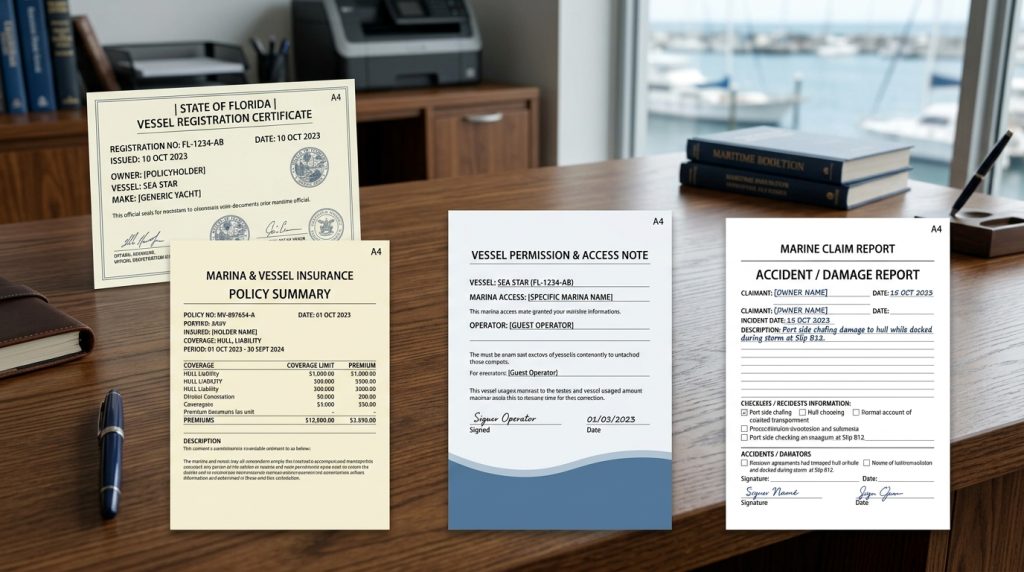
Important questions include:
- Who owned the boat?
- Who was operating it?
- Did the operator have express permission?
- Did the operator have implied permission?
- Was the boat borrowed, rented, or taken without consent?
- Was the operator allowed to carry passengers?
- Was the operator allowed to use the vessel in that location?
- Was the operator using the boat for private or commercial purposes?
- Was alcohol involved?
- Was the operator licensed or trained when required?
Permission evidence may include text messages, emails, witness statements, marina records, rental forms, boat club records, registration documents, and insurance letters.
Homeowner’s Insurance and Umbrella Coverage
Some boating accident claims may involve homeowner’s or umbrella insurance. This depends on the policy language, vessel size, motor type, horsepower, ownership, storage location, and whether the policy excludes watercraft claims.
Homeowner’s or umbrella coverage may be reviewed when:
- A small boat is involved.
- A private boat owner caused injury.
- A passenger was injured on a private vessel.
- A dock or property hazard contributed.
- The owner has excess liability coverage.
- A family member operated the vessel.
- A watercraft exclusion is disputed.
These policies can be difficult to evaluate without the full policy. A declarations page alone is not always enough. The policy’s definitions, exclusions, endorsements, watercraft provisions, and umbrella terms should be reviewed.
Rental Boat Insurance
Rental boat accidents may involve insurance held by a rental company, marina, livery operator, vessel owner, renter, or another party. The rental agreement may discuss liability, damage responsibility, operating rules, insurance terms, waivers, and authorized operators.
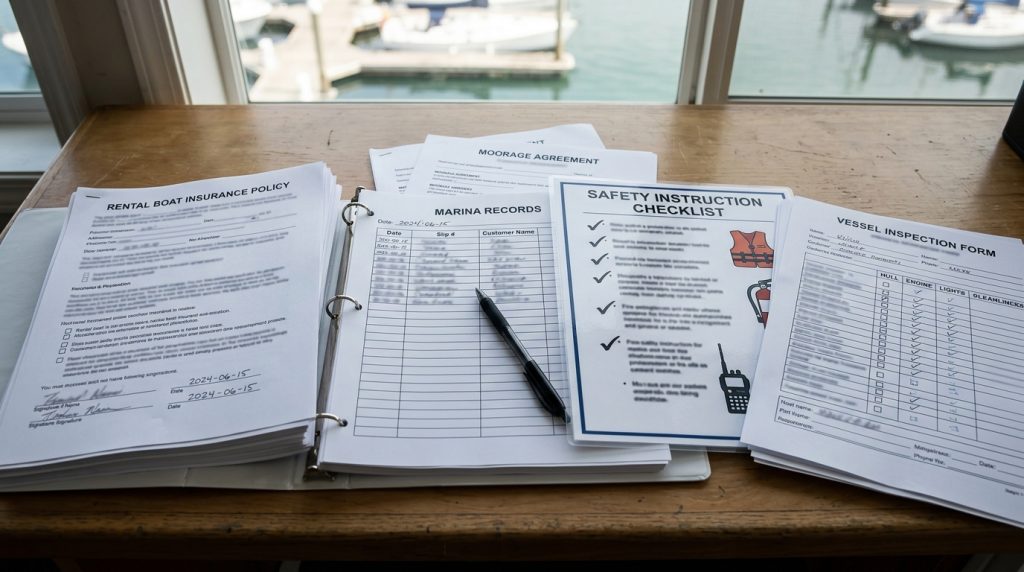
Rental boat insurance may matter when:
- The boat was rented from a marina.
- A Jet Ski or personal watercraft was rented.
- A passenger was injured on a rental vessel.
- The rental company failed to provide safety instructions.
- The rental company provided unsafe equipment.
- The vessel malfunctioned.
- The renter operated outside permitted boundaries.
- A dock or marina employee contributed.
- Safety equipment was missing or improperly sized.
Rental-related evidence may include:
- Rental agreement
- Safety instruction checklist
- Authorized operator list
- Age and identification records
- Vessel inspection forms
- Maintenance logs
- Life jacket records
- Incident reports
- Insurance documents
- Employee statements
- GPS or tracking data
A rental agreement waiver does not automatically answer every insurance issue. The exact wording, facts, safety rules, company conduct, and policy language may all matter.
Jet Ski and Personal Watercraft Coverage
Jet Ski and personal watercraft claims can involve separate insurance questions because these vessels are often rented, borrowed, or operated by people with limited experience. Personal watercraft accidents may involve high speed, sharp turns, rider ejection, wake-jumping, collisions, or passenger injuries.
Coverage questions may include:
- Who owned the personal watercraft?
- Was it rented?
- Was the operator authorized?
- Was the rider old enough?
- Was safety instruction provided?
- Was a life jacket worn?
- Was the engine cut-off lanyard used when required?
- Did the accident happen in a restricted area?
- Did the policy exclude racing, rental, commercial, or reckless use?
- Did alcohol or drug use affect coverage?
A related boat accident attorney guide may help explain why personal watercraft claims often require review of rental records, vessel rules, owner permission, and insurance coverage together.
Marina and Dock Insurance
Not every boating accident happens while a vessel is moving. Some injuries happen on docks, ramps, slips, gangways, fuel docks, parking areas, piers, rental staging areas, or marina walkways. In those cases, marina liability insurance, property insurance, maintenance contractor coverage, or public entity coverage may matter.
Marina or dock insurance may be relevant when the injury involves:
- Broken dock boards
- Slippery walkways
- Poor lighting
- Loose cleats
- Unsafe ladders
- Missing handrails
- Fuel spills
- Electrical hazards
- Defective ramps
- Unsecured ropes or cables
- Unsafe boarding areas
- Dock collision caused by marina conduct
- Rental staging hazards
A premises liability attorney resource may help readers understand how property control, inspection records, maintenance practices, notice, and unsafe conditions can overlap with dock and marina injury claims.
Charter, Tour, and Commercial Vessel Coverage
Commercial vessel claims can involve different coverage questions than private recreational boating claims. A fatal or serious injury on a charter boat, fishing trip, sightseeing vessel, water taxi, tour boat, or other passenger vessel may involve company policies, commercial liability coverage, inspection records, crew training, and passenger safety rules.
Commercial coverage may be relevant when:
- The boat carried paying passengers.
- The operator was part of a business.
- A crew member failed to assist.
- The vessel was used for a charter or tour.
- The injury happened during boarding or disembarking.
- The vessel lacked proper safety equipment.
- Weather conditions were ignored.
- The operator was unqualified or impaired.
- The company failed to respond properly after injury.
Insurance may depend on whether the trip was truly private, partly commercial, or fully commercial. Contracts, receipts, booking records, business records, vessel documents, and passenger lists may help clarify coverage.
Another Boater’s Insurance
In a multi-vessel collision, the responsible policy may belong to another boater. This can happen when one boat hits another, creates unsafe wake, crosses too closely, fails to yield, operates too fast near docks, or fails to maintain proper lookout.
Another boater’s insurance may be reviewed when:
- Two boats collide.
- A boat hits a personal watercraft.
- A wake causes passenger injury.
- A boat strikes a swimmer or paddler.
- A vessel hits a docked boat.
- A boat operator is impaired.
- A vessel violates speed or navigation rules.
New York Navigation Law § 45 requires careful and prudent vessel operation and prohibits speed greater than reasonable and prudent under existing conditions and hazards. The statute also restricts operation within 100 feet of shore, docks, piers, floats, rafts, or anchored vessels to no more than five miles per hour in many situations.
Operator conduct and insurance coverage should be reviewed together.
Product Liability Insurance
Some boating accidents happen because a vessel or component fails. In those cases, product liability coverage may be relevant. The claim may involve the manufacturer, distributor, seller, installer, or repair provider depending on what failed and why.
Product-related claims may involve:
- Defective steering
- Throttle malfunction
- Engine failure
- Fuel system defect
- Defective life jacket
- Faulty ladder or swim platform
- Defective personal watercraft controls
- Defective navigation lights
- Faulty engine cut-off switch
- Poor warnings or instructions
- Defective safety equipment
The vessel and damaged parts should be preserved when product defect is suspected. Repairing, replacing, or disposing of parts can create serious proof problems.
Maintenance Contractor Insurance
A maintenance provider, repair shop, marina service department, or equipment installer may have insurance if poor maintenance contributed to the accident.
Maintenance-related coverage may matter when:
- Steering failed after recent service.
- The engine malfunctioned after repair.
- Navigation lights did not work.
- Fuel system repairs were incomplete.
- A ladder or railing failed.
- Personal watercraft controls malfunctioned.
- A rental boat was not inspected.
- Prior mechanical complaints were ignored.
Useful evidence may include invoices, work orders, maintenance logs, inspection records, technician notes, parts records, photos, and expert inspection findings.
Public Entity Coverage
Some boating accidents involve public docks, municipal marinas, state parks, public boat launches, public vessels, public authorities, or government-controlled waterfront areas. These cases may involve special notice requirements and different claim procedures.
New York General Municipal Law § 50-e generally requires a notice of claim within 90 days when notice is required for certain tort claims against public corporations. (law.justia.com)
Public entity coverage may be relevant when the accident involves:
- Municipal marina
- Public dock
- Public boat launch
- State park waterfront
- Public vessel
- Public authority property
- Government-maintained ramp
- Publicly controlled pier
- Public swimming or boating area
The exact accident location should be documented early because the responsible entity may not be obvious from signs or public use alone.
Boating While Intoxicated and Insurance Disputes
Alcohol or drug impairment can create both liability and coverage disputes. An insurer may argue that a policy exclusion applies, that the operator violated policy terms, or that the impaired operator was not authorized to use the vessel.
New York Navigation Law § 49-A addresses vessel operation while under the influence of alcohol or drugs.
Alcohol-related evidence may include:
- Police or marine patrol reports
- Chemical test results
- Witness statements
- Passenger accounts
- Photos or videos
- Bar or marina receipts
- Open container evidence
- Operator admissions
- Emergency responder observations
Even when intoxication is alleged, the insurance analysis should not stop there. Other responsible parties, including vessel owners, rental companies, marinas, or other boaters, may still need review depending on the facts.
Accident Reporting and Insurance Notice
Accident reporting and insurance notice are separate but both can matter. New York Navigation Law § 47-B requires a written report within five days after a qualifying vessel accident involving death, injury, disappearance under the water, or property damage to any one person above the statutory threshold.
Insurance notice may have different deadlines based on policy language. A policy may require prompt notice, cooperation, preservation of evidence, medical authorization, or documentation of property damage.
Important records may include:
- Boating accident report
- Police or marine patrol report
- Insurance claim number
- Adjuster letters
- Notice letters
- Denial letters
- Reservation of rights letters
- Medical bills
- Repair estimates
- Vessel photographs
- Witness information
A delay in insurance notice may create avoidable disputes.
Reservation of Rights and Denial Letters
Insurance companies may send letters that explain whether they are accepting coverage, investigating under reservation of rights, or denying coverage. These letters should be saved carefully.
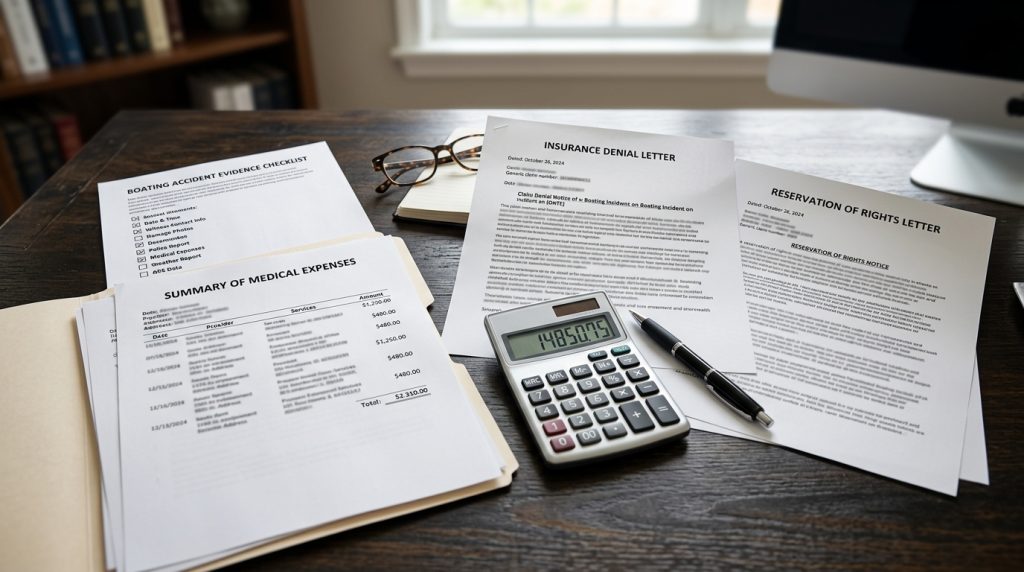
Important insurance letter language may involve:
- Policy exclusions
- Unauthorized use
- Commercial use
- Alcohol or criminal conduct
- Late notice
- Failure to cooperate
- Rental agreement violations
- Watercraft exclusions
- Coverage limits
- Defense obligations
- Medical payment limits
- Property damage limits
A reservation of rights letter does not always mean there is no coverage. It usually means the insurer is investigating while preserving its ability to raise coverage defenses.
Medical Payment and Injury Documentation
Some policies may include limited medical payment coverage, but serious injury claims usually require more complete damages documentation. Medical records still matter even when liability coverage exists.
Important medical records may include:
- Emergency medical services records
- Emergency room records
- Hospital records
- Imaging reports
- Specialist notes
- Surgery records
- Therapy records
- Prescription receipts
- Work restriction notes
- Medical bills
- Future care recommendations
For broader documentation planning, readers may review how evidence for personal injury claims can help connect the accident, injury, responsible party, and damages.
Property Damage and Vessel Repair Claims
Boating accidents may involve property damage as well as bodily injury. Property damage may include damage to the vessel, dock, marina structure, personal watercraft, equipment, electronics, fishing gear, phones, clothing, or other personal property.
Property damage evidence may include:
- Vessel damage photos
- Repair estimates
- Surveyor reports
- Marina invoices
- Towing or salvage records
- Damaged equipment photos
- Replacement receipts
- Maintenance records
- Insurance estimates
- Expert inspection reports
Property damage evidence can also support injury causation. For example, collision damage, broken seating, railing damage, or propeller damage may help explain how the injury occurred.
Insurance Coverage and Settlement Value
Insurance coverage can affect settlement value because available policy limits may shape negotiation, litigation strategy, and recovery options. However, coverage is only one part of claim evaluation.
Settlement value may depend on:
- Liability evidence
- Injury severity
- Medical treatment
- Permanent limitations
- Lost income
- Pain and suffering
- Future care needs
- Comparative fault
- Policy limits
- Multiple insurance sources
- Coverage disputes
- Public entity involvement
- Product defect evidence
- Wrongful death issues
Publicly available personal injury case results may provide general context, although every boating accident claim depends on its own facts, evidence, injuries, coverage, and applicable law.
Deadlines in Boating Accident Insurance Claims
Deadlines can involve multiple layers. There may be boating accident reporting deadlines, policy notice deadlines, public entity notice deadlines, and lawsuit filing deadlines.
The New York Courts statute of limitations timetable lists three years for many negligence-based personal injury claims, two years for wrongful death claims, and three years for product liability matters. (nycourts.gov)
However, insurance notice and evidence preservation may be urgent long before the lawsuit deadline. Surveillance footage may be overwritten, GPS data may be deleted, rental records may be archived, and vessels may be repaired.
Common Insurance Mistakes After a Boating Accident
Some mistakes can make insurance claims harder to evaluate.
Common mistakes include:
- Not identifying the vessel owner
- Not identifying the operator
- Not asking for insurance information
- Assuming only one policy applies
- Not saving rental agreements
- Not preserving marina or dock records
- Not reporting a qualifying boating accident
- Waiting too long to notify insurers
- Giving broad recorded statements too early
- Allowing vessel repair before inspection
- Throwing away damaged safety equipment
- Not documenting medical treatment
- Accepting a quick settlement before coverage is reviewed
- Missing public entity notice deadlines
A strong insurance claim usually depends on organized records, early notice, preserved evidence, and careful review of every possible responsible party.
When Legal Guidance May Be Useful
Legal guidance may be useful when a boating accident involves serious injury, multiple vessels, a borrowed boat, a rental boat, a Jet Ski, a marina, unsafe dock conditions, alcohol, public property, mechanical failure, or unclear insurance coverage.
A boating accident insurance review may require accident reports, vessel ownership records, operator permission evidence, rental agreements, marina records, maintenance logs, insurance policies, denial letters, medical records, public entity rules, and deadlines.
People researching local support may review a Farmingdale legal office location when looking for Long Island boating accident claim information.
FAQs About Boating Accident Insurance Claims
What insurance covers a boating accident in New York?
Coverage may come from boat insurance, vessel owner insurance, homeowner’s insurance, umbrella coverage, rental company insurance, marina liability insurance, commercial vessel insurance, product liability coverage, maintenance contractor coverage, or public entity coverage depending on the facts.
Can a boat owner’s insurance apply if someone else operated the boat?
It may apply when the operator used the vessel with the owner’s express or implied permission, depending on the policy and facts. Ownership, permission, exclusions, operator status, and vessel use should all be reviewed.
Does homeowner’s insurance cover boating accidents?
Sometimes, but not always. Homeowner’s policies may have watercraft exclusions or limits based on vessel size, motor, horsepower, ownership, or use. The full policy, not just the declarations page, should be reviewed.
What if a rental boat caused the accident?
Rental boat claims may involve the renter, operator, rental company, vessel owner, marina, maintenance provider, or another boater. The rental agreement, instruction forms, inspection logs, insurance terms, and vessel records may all matter.
Can insurance deny coverage after a boating while intoxicated accident?
An insurer may raise coverage defenses or exclusions when alcohol or drug impairment is involved. A denial or reservation of rights letter should be reviewed carefully because other insurance sources or responsible parties may still exist.
Final Thoughts
Insurance coverage after a New York boating accident can involve several policies and several responsible parties. A claim may require review of vessel ownership, operator permission, rental agreements, marina records, maintenance history, public property issues, alcohol evidence, policy exclusions, and medical documentation. The strongest claims usually depend on early accident reporting, preserved evidence, complete insurance records, and a clear timeline showing how the accident happened and which coverage sources may apply.